
Cement Plant Equipment Condition Monitoring Prevents $500,000 Planetary Gearbox Failure
Summary
One of the world’s top white cement manufacturers was struggling to monitor the roller press, one of the most critical pieces of cement equipment in the plant.
After deploying Nanoprecise’s predictive maintenance sensors across the roller press bearing points, the plant detected early-stage gear and lubrication anomalies in the planetary gearbox.
The maintenance team was alerted early enough to take corrective action and conduct necessary maintenance before further damage occurred.
Result Achieved
Early detection prevented a $500,000 planetary gearbox failure, enabling corrective action during planned maintenance and avoiding unplanned downtime.
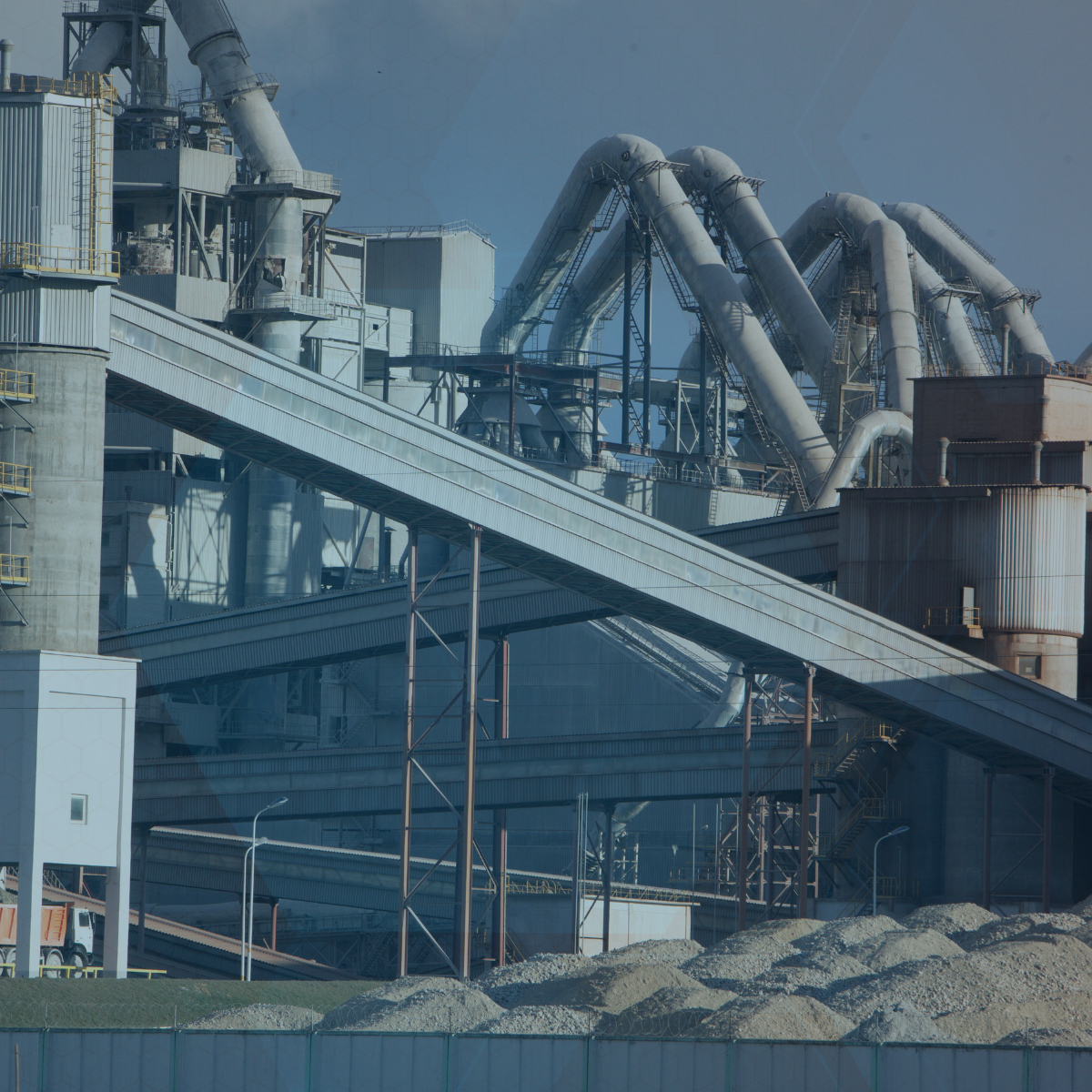
Cement Manufacturing Customer Profile
This customer is one of the world’s top cement manufacturers and a leader in grey cement and ready mix concrete, with a production capacity of 102.75 million tonnes per annum.
The Challenge in the Cement Manufacturing Process
In cement manufacturing, monitoring the roller press is challenging due to its large size and complex operating conditions. As one of the most critical assets in the grinding circuit, any failure in its planetary gearbox or journal bearings can bring production to a standstill and result in significant financial losses.
Without early condition monitoring on cement equipment, faults often surface only after significant internal damage has occurred, which was a concern for this customer.
The Solution: Better Cement Plant Equipment Monitoring
This customer installed Nanoprecise’s MachineDoctor predictive maintenance sensors on their roller press bearing points to continuously monitor:
- Vibration (multi-axis RMS acceleration)
- Temperature
- Overall machine condition indicators.
Sensor data was transmitted wirelessly and analyzed with the Nanoprecise platform. Automated notifications were sent directly to end users when anomalies exceeded defined limits.
Cement Equipment Monitored
The priority assets monitored included:
- Roller Press
- Planetary Gearbox
- Bearings
Observation & Analysis
Vibration Monitoring: Emerging Trend Detection
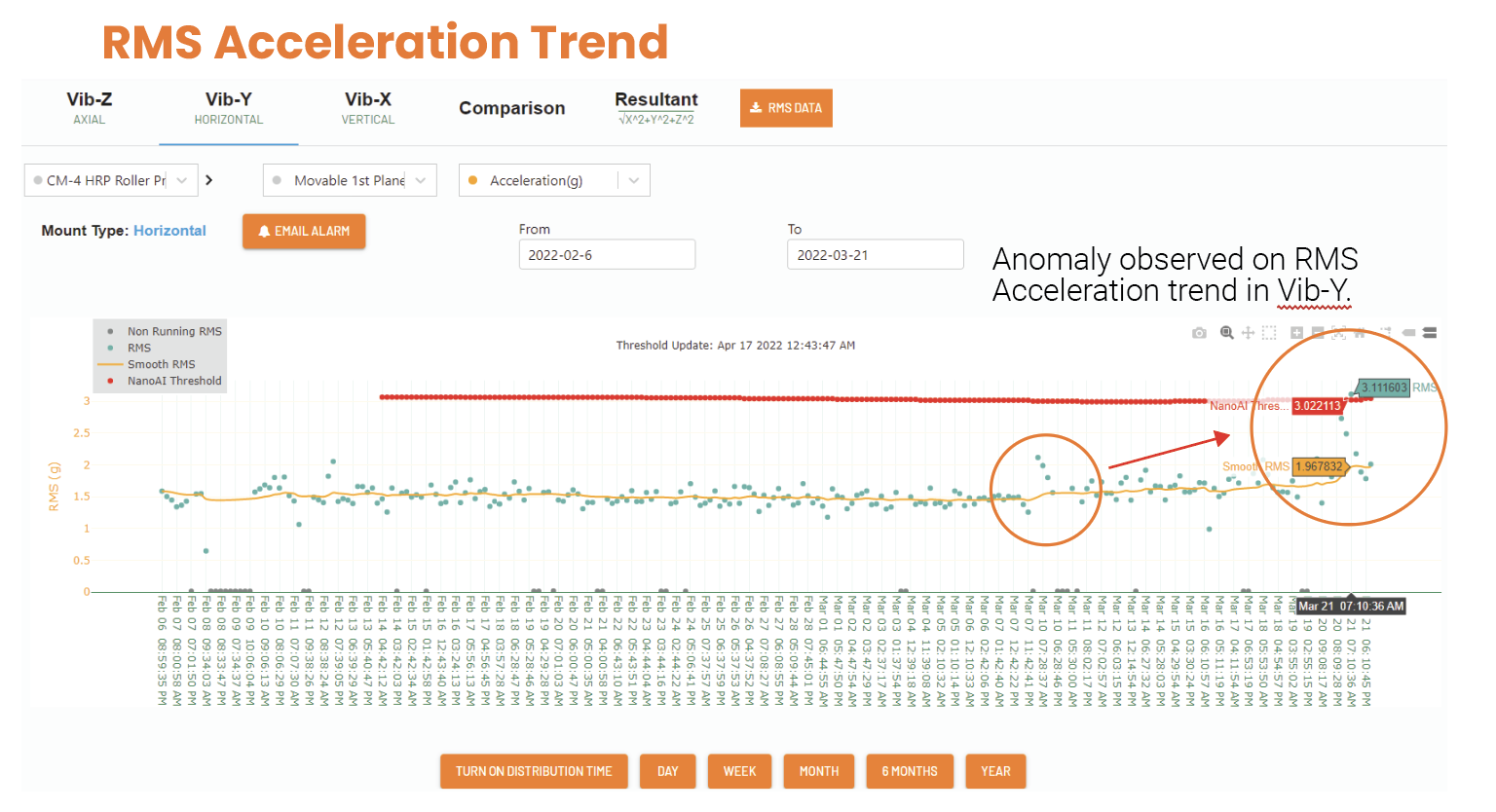
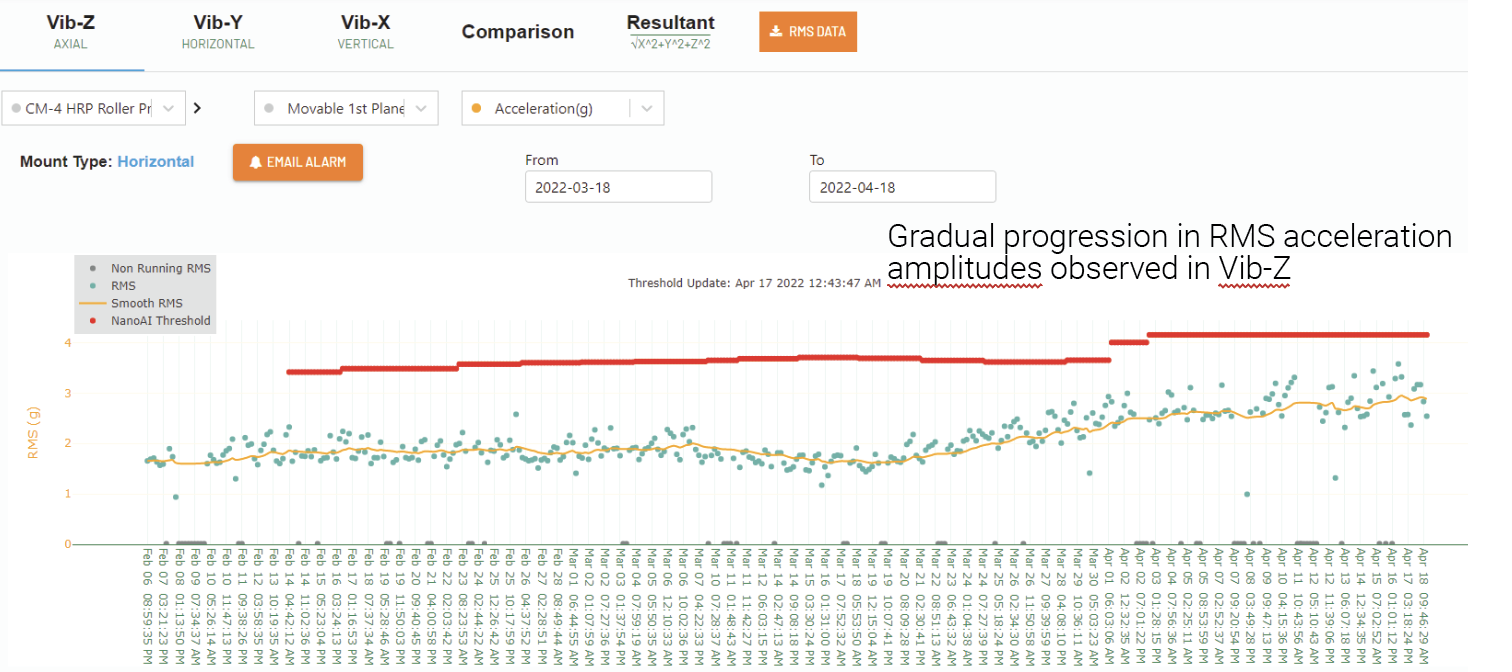
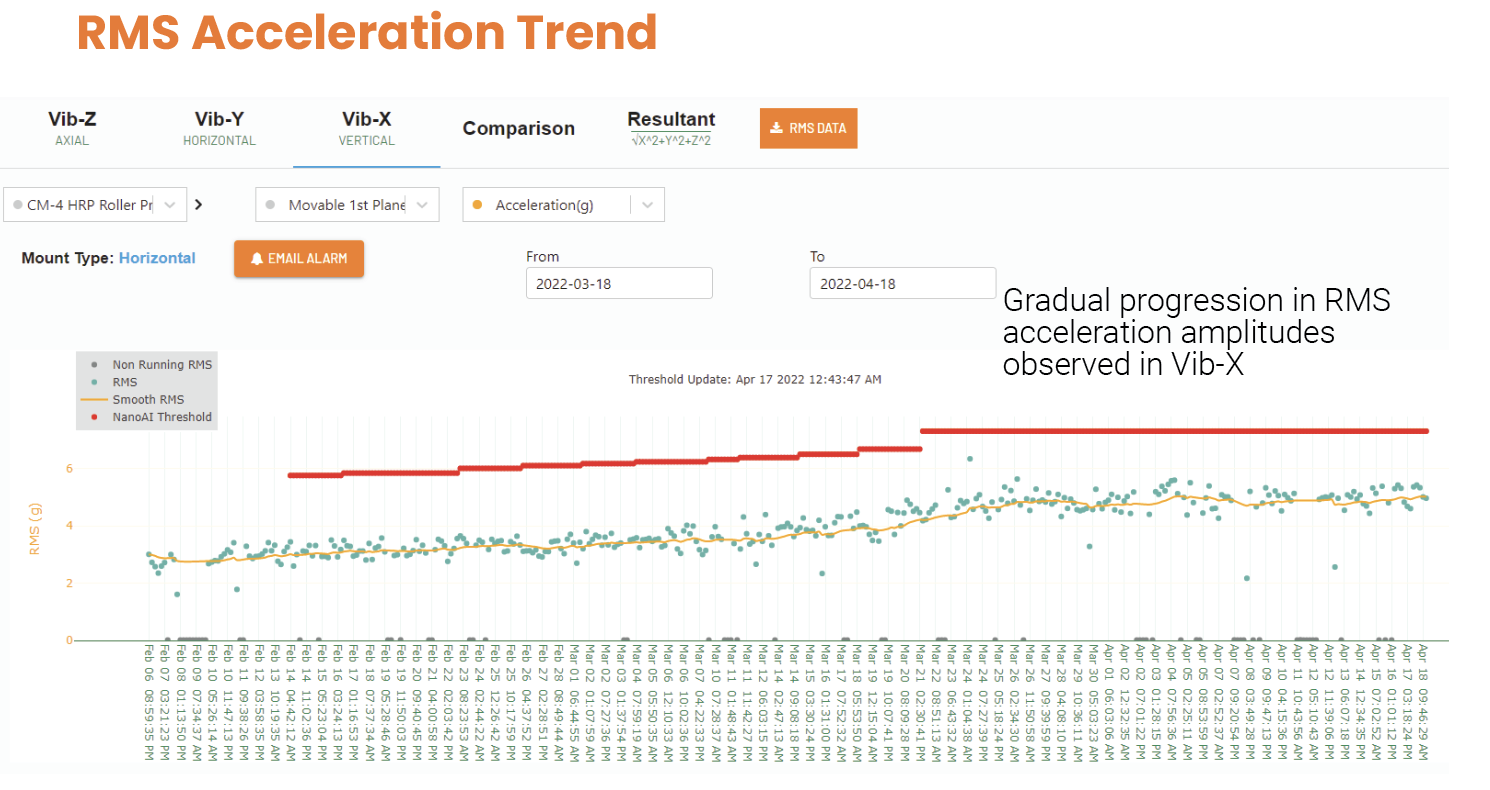
An anomaly was observed in the following vibrations:
- Increasing RMS acceleration trend in Vib-Y (Horizonal) (Fig. 1).
- Gradual progression of RMS acceleration amplitudes in Vib-Z (axial) (Fig 2) and Vib-X (vertical) (Fig 3).
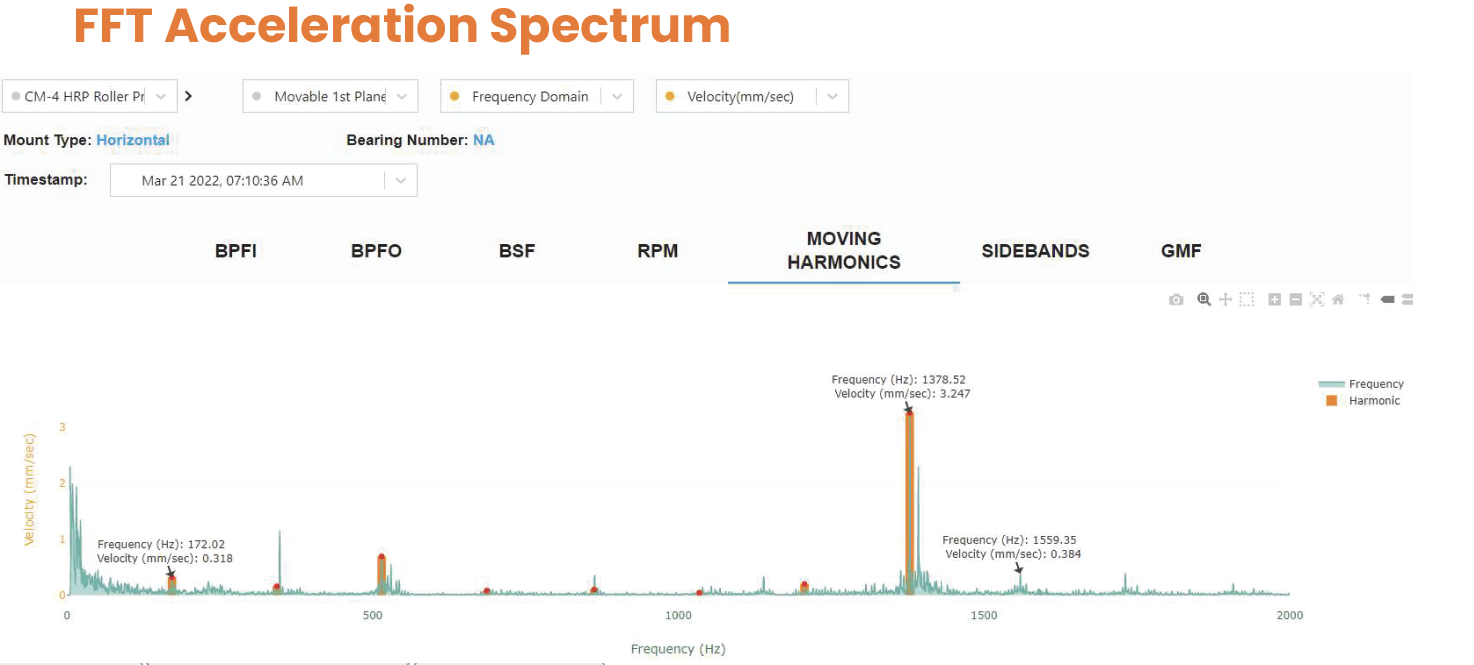
- Abnormal frequencies and velocities on the FTT acceleration spectrum (Fig 4).
Gear Fault & Lubrication Contamination Indicators
- Gear faults and potential eccentricity
- Lubrication contamination issues
- Progressive internal wear
Oil analysis confirmed the diagnosis:
- Moisture content above 20,000 ppm (normal range: up to 500 ppm)
- Presence of cutting wear particles above normal levels
- Machine wear condition rated as ‘Caution’
Recommendations by Nanoprecise:
- Inspect gearbox for gear eccentricity and wear
- Check lubrication condition and contamination levels
- Inspect bearings for increased clearances
- Replace contaminated gearbox oil
Impacts & Outcome
Based on the early alert:
- Oil was replaced during scheduled preventive maintenance
- Further gear damage was mitigated
- Catastrophic planetary gearbox failure was avoided
- An estimated gearbox failure worth $500,000 prevented
Key Outcomes For the Customer
- Early fault detection in critical equipment
- Prevention of major production disruption
- Improved lubrication management practices
- Reduced operational and financial risk
- Extended gearbox service life
Conclusion
In cement manufacturing, roller press failures can halt grinding operations and trigger significant financial losses. By implementing wireless multi-parameter condition monitoring and AI-driven anomaly detection, the plant identified lubrication contamination and developing gear faults before catastrophic damage occurred.
This proactive approach enabled planned intervention, protected a high-value asset, and prevented a $500,000 gearbox failure, demonstrating the value of continuous condition monitoring in heavy industrial environments.